
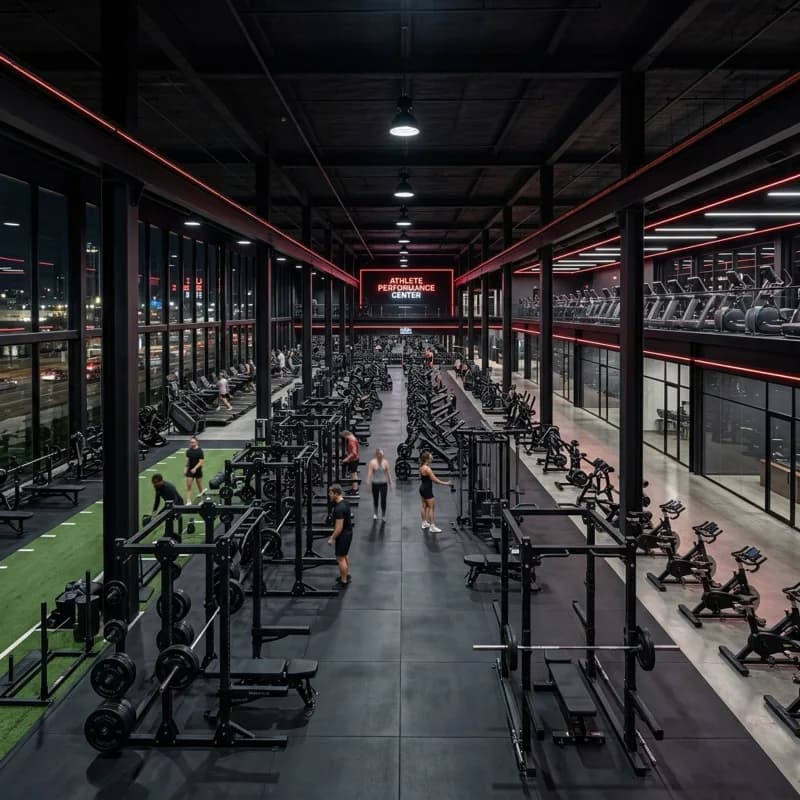
In the commercial strength industry, marketing literature routinely advertises "1,000 lb capacity" on equipment fabricated from light-gauge steel with partial-penetration spot welds. For gym owners, structural engineers, and competitive athletes, these claims obscure the vital distinction between static load limits and dynamic impact resistance.
1. Steel Gauge Physics: 11-Gauge vs 14-Gauge
The gauge system operates inversely: lower numerical values denote thicker structural walls. In equipment manufacturing, the gap between commercial grade and residential consumer grade is stark:
- 11-Gauge Structural Steel: Nominal thickness of 0.120 inches (~3.04 mm). Under structural bending calculations, an 11-gauge 3"x3" column exhibits more than double the torsional resistance of a 14-gauge equivalent.
- 14-Gauge Commodity Steel: Nominal thickness of 0.075 inches (~1.90 mm). Commonly found in retail consumer racks. Susceptible to progressive ovaling around pinholes under repeated drop shocks.
When an athlete misses a 500 lb squat and dumps the barbell onto safety pins from a height of 6 inches, the instantaneous peak dynamic force easily exceeds 2,500 lbs. Under this shock, 14-gauge steel suffers localized plastic deformation. 11-gauge steel, by contrast, disperses the stress wave across the vertical tube column while remaining safely within its elastic limit.
2. Weld Quality: Robot-Driven GMAW Penetration vs Surface Bead
A steel tube is only as reliable as its welded junctions. In heavy power racks and Smith machines, the interface between uprights and base runners carries extreme shear stresses. There are two prevalent fabrication methods:
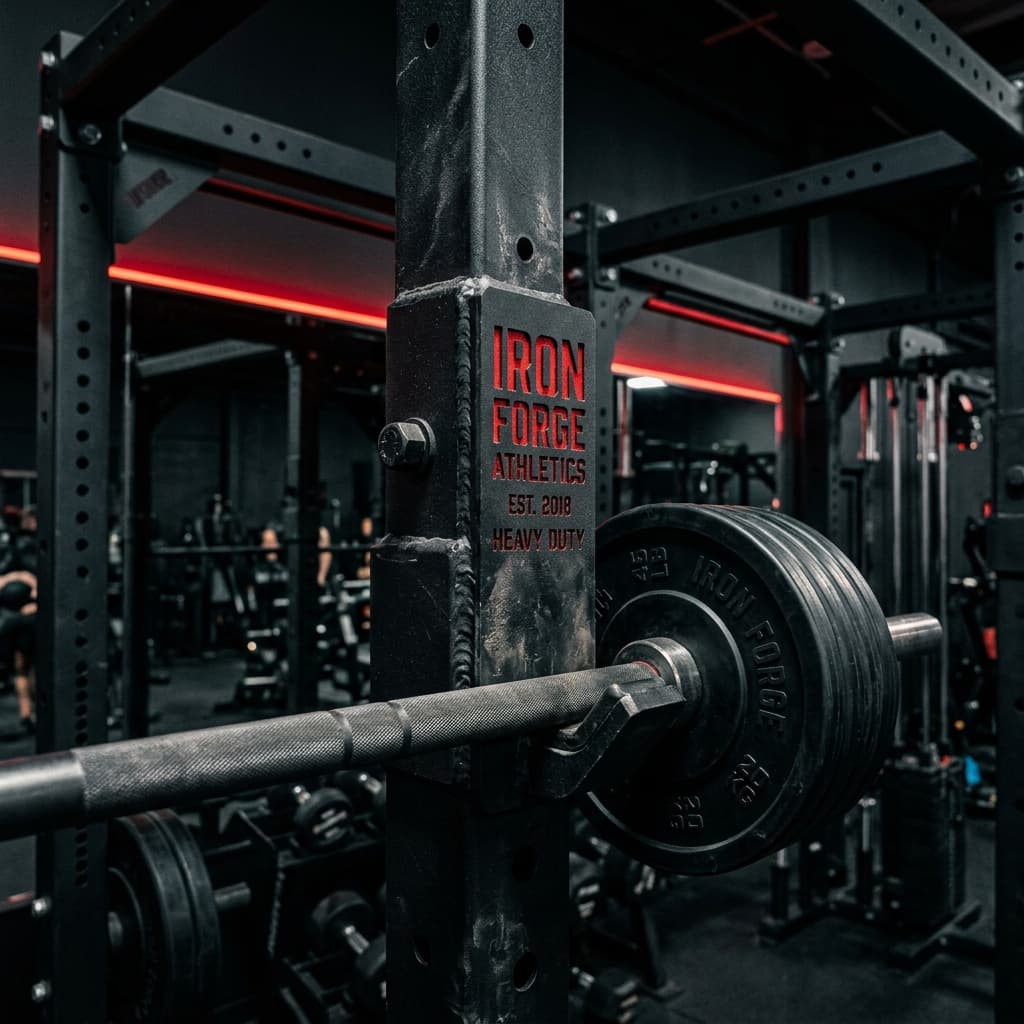
- Continuous Fillet Robotic GMAW (Gas Metal Arc Welding): Uses shielded argon-CO2 blends to achieve deep root penetration, fusing the tube walls at a molecular level. The weld bead has zero porosity and uniform throat depth.
- Intermittent Manual Tack Welding: Applied rapidly to minimize manufacturing time. While visually acceptable on the surface, lack of root penetration creates stress concentration notches that can propagate fatigue cracks under cyclic loading.
3. Static vs Dynamic Load Ratings: The Critical Distinction
Never rely on a single load rating figure without understanding testing methodology. Professional facilities distinguish between two separate ratings:
| Load Metric | Definition & Testing Method | Commercial Standard | Failure Mechanism |
|---|---|---|---|
| Static Load Limit | Stationary hydraulic pressure applied gradually | 2,500+ lbs (1,130 kg) | Column buckling under compressive load |
| Dynamic Impact Rating | Free-fall drop test from 12-inch elevation | 800+ lbs dropped shock | Safety arm shear or pin fracture |
| Cyclic Fatigue Life | 100,000 repetitions at 70% rated capacity | ASTM F2216 compliance | Micro-cracking around weld heat-affected zones |
4. Hardware, Fasteners, and Gusset Reinforcement
The integrity of a bolted power rack relies entirely on hardware grade and joint design. Commercial equipment uses 5/8-inch (16 mm) or 1-inch (25 mm) Grade 8.8 high-tensile structural bolts. Utilizing hardware below Grade 8.8 introduces shear vulnerabilities under severe shock. Furthermore, heavy steel corner gussets with triangular reinforcement are critical to eliminate parallelogram racking when lateral force is exerted during heavy re-racks.
5. Engineering Verdict
True equipment safety is measurable. It resides in 11-gauge wall thickness, deep-penetration continuous robotic welds, Grade 8.8 structural hardware, and dual triangular gusseting. When evaluating commercial equipment for your facility or home gym, inspect the steel gauge specifications and weld root depth rather than trusting marketing claims.


Discussion & Comments (0)
Be the first to share your thoughts on this equipment guide.
Leave a Comment
Your comment will appear after moderation review.