


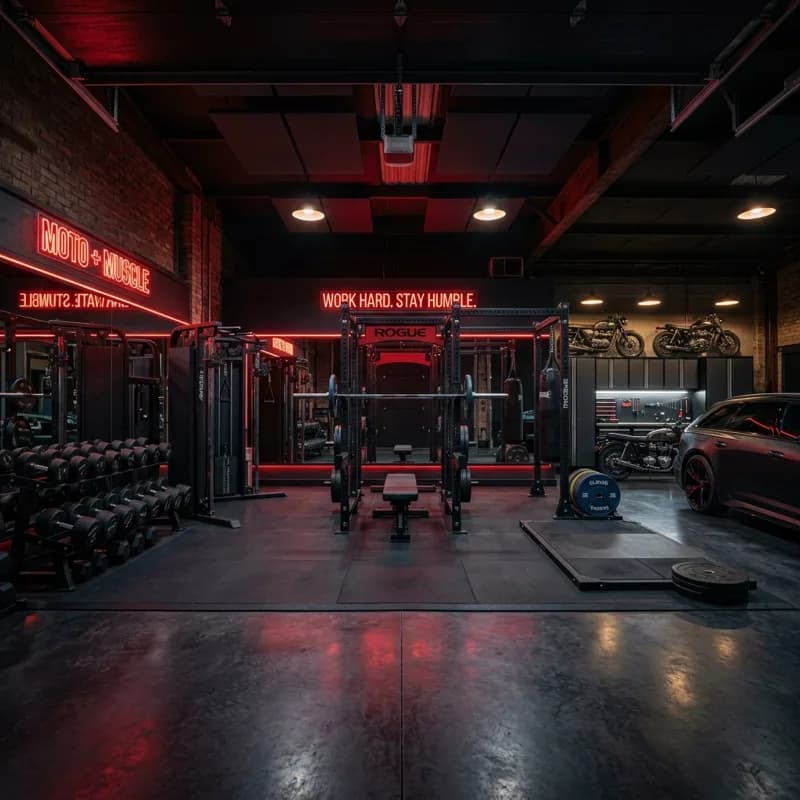
Building an elite training space at home is not a matter of accumulating gadgets; it is an exercise in structural prioritization. When lifters attempt to replicate a commercial gym on a $5,000 capital budget, the most frequent failure point is allocating capital across too many low-grade pieces rather than anchoring the space with high-tolerance, structural steel.
1. The 60-20-15-5 Capital Allocation Rule
To avoid structural regret, capital expenditure must directly mirror biomechanical safety. In a professional strength environment, 90% of progressive overload occurs between four core movements: squats, presses, pulls, and hinges. Your budget allocation must reflect this mechanical reality:
- 60% ($3,000) — Primary Structural Unit: An industrial power rack or dual-cable Smith station engineered from minimum 11-gauge structural steel tube with precision hole spacing and certified safety catches.
- 20% ($1,000) — Kinetic Interface (Barbell & Weight Plates): A calibrated 20 kg bushing or bearing barbell featuring tensile ratings above 190,000 PSI, paired with durable vulcanized rubber bumper plates.
- 15% ($750) — Adjustable Utility Bench: A heavy structural bench with zero lateral wobble, minimum 1,000 lb static test rating, and commercial closed-cell foam padding.
- 5% ($250) — Foundation & Flooring: High-density vulcanized rubber stall mats (minimum 3/4-inch thickness) to preserve concrete subfloors and absorb kinetic vibration.
2. Foundation: Why 11-Gauge Structural Steel Is Non-Negotiable
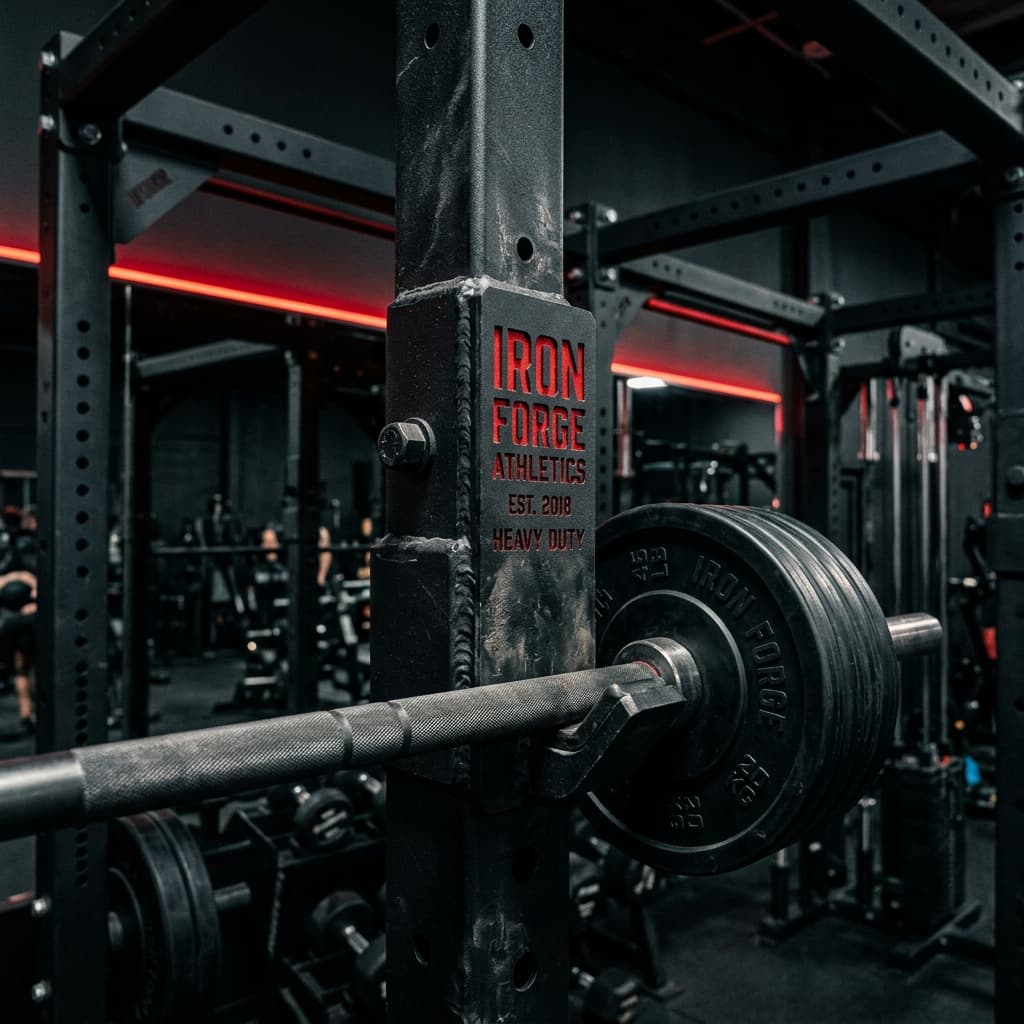
In residential settings, lifters often assume lighter 14-gauge or 16-gauge equipment is sufficient. This is a hazardous engineering misconception. Wall thickness defines torsional rigidity under load. When a loaded bar drops onto safety pins, dynamic shock waves travel through the uprights. 11-gauge steel (approximately 3.0 mm wall thickness) absorbs shock without progressive metal fatigue, whereas thinner gauges deform incrementally, compromising pin alignment over time.
When selecting your primary cage or machine, evaluate three critical factors:
- Upright Dimensions: Prioritize 3"x3" or 2"x3" tubing with laser-cut holes rather than punched holes that create micro-fractures in the steel perimeter.
- Base Footprint Stability: Look for gusset-reinforced base plates extending beyond the vertical plane to prevent tipping without compulsory floor anchoring.
- Hardened Safety Catches: Safety arms must feature UHMW plastic liners to protect knurling while dampening the acoustic impact of missed attempts.
3. Budget Allocation Matrix ($5,000 Baseline)
| Category Component | Technical Requirement | Target Budget | Priority |
|---|---|---|---|
| Rack / Functional Station | 11-Gauge steel, J-cups, pull-up bar | $2,800 – $3,200 | Critical |
| Calibrated Barbell | 190K+ PSI tensile, moderate knurl | $350 – $450 | Critical |
| Rubber Plate Set (320 lbs) | High durometer rubber, steel inserts | $550 – $650 | Critical |
| Adjustable Commercial Bench | 0° to 85° incline, ladder adjustment | $450 – $600 | High |
| 3/4" Rubber Flooring (4 mats) | Vulcanized dense rubber | $200 – $250 | Essential |
4. Flooring and Spatial Blueprinting
Before installing heavy equipment, verify room ceiling heights and floor load ratings. Commercial power cages require a minimum clear ceiling height of 86 inches (218 cm) for structural clearance, and ideally 96 inches (244 cm) to allow overhead presses and full-extension pull-ups. Laying continuous 3/4-inch rubber eliminates point-loading on residential concrete slabs, distributing load across 32 square feet per station.
5. Engineering Verdict
A $5,000 budget, when governed by material discipline, yields an operational facility that will outlast decades of maximal lifting. Do not dilute your resources across cheap motorized machines or uncalibrated weights. Anchor your gym in certified 11-gauge steel, invest in a barbell rated for lifetime cyclic loading, and build outwards only when progressive overload demands it.


Discussion & Comments (0)
Be the first to share your thoughts on this equipment guide.
Leave a Comment
Your comment will appear after moderation review.